Deep Residual Shrinkage Network असल में Deep Residual Network रो ही एक सुधरायोड़ो रूप (improved variant) है। मोटी बात आ है कि, Deep Residual Shrinkage Network में Deep Residual Network, attention mechanisms, और soft thresholding functions मिलियोड़ा होवे।
आप Deep Residual Shrinkage Network ने इयाँ समझ सको हो कि ओ काम कियाँ करे। पहली, ओ network attention mechanisms use कर’र बेकार (unimportant) features ने पिछाणे। पछे, ओ network soft thresholding functions use कर’र इन बेकार features ने zero कर देवे। इसके उल्ट, network काम रा (important) features ने पिछाणे और उने संभाल’र राखे। आ चीज deep neural network री ताकत बढ़ा देवे। इस सूं network ने noise वाले signals में सूं काम रा features निकालण में मदद मिले।
1. शोध रो कारण (Research Motivation)
सबसूं पहली बात, जद algorithm samples ने classify करे, तो noise तो होवे ही है। Noise रा उदाहरण (examples) है Gaussian noise, pink noise, और Laplacian noise। थोड़ा और खुल’र कहा, तो samples में कई बार ऐसी जानकारी होवे जो current classification task वास्ते काम री कोनी होवे। आप इन बेकार जानकारी ने noise मान सको हो। ओ noise classification री performance ने कम कर सके। (Soft thresholding कई signal denoising algorithms रो एक main step होवे।)
उदाहरण के तौर पर, सड़क किनारे हो रही बात-चीत ने समझो। Audio में गाड़ी के horn और पहिया (wheels) री आवाज आ सके। मान लो कि म्हने इन signals पर speech recognition करणी है। तो background री आवाज result ने खराब कर सके। Deep learning रे हिसाब सूं, deep neural network ने horn और wheels सूं जुड़े features ने हटा देणो चाइजे। इयाँ करण सूं ये features म्हारी speech recognition रे result ने खराब कोनी करेला।
दूसरी बात, अलग-अलग samples में noise री मात्रा कम-ज्यादा हो सके। ये फरक एक ही dataset रे मायने भी हो सके। (आ चीज attention mechanisms सूं मिलती-जुलती है। एक image dataset रो उदाहरण लो। हर photo में target object अलग जगह पर हो सके। Attention mechanisms हर photo में target object री सही जगह पर ध्यान लगा सके।)
उदाहरण वास्ते, एक cat-and-dog classifier ने train करण री सोचो जिथे 5 photos पर “dog” रो label है। Image 1 में कुत्ता और चूहा (mouse) हो सके। Image 2 में कुत्ता और हंस (goose) हो सके। Image 3 में कुत्ता और मुर्गी (chicken) हो सके। Image 4 में कुत्ता और गधा (donkey) हो सके। Image 5 में कुत्ता और बतख (duck) हो सके। Training रे time, बेकार चीज classifier ने confuse करेला। जियाँ कि चूहा, हंस, मुर्गी, गधा और बतख। इस वजह सूं classification री accuracy कम हो जावे। अगर म्हने इन बेकार चीजां रो पतो चल जावे, तो म्हे उनसे जुड़े features ने हटा सको हाँ। इस तरह सूं, म्हे cat-and-dog classifier री accuracy बढ़ा सको हाँ।
2. Soft Thresholding
Soft thresholding कई signal denoising algorithms रो एक core step है। अगर features री absolute values एक threshold सूं कम होवे, तो algorithm उने उड़ा देवे (eliminates)। अगर features री absolute values इस threshold सूं ज्यादा होवे, तो algorithm उने zero री तरफ सिकोड़ देवे (shrinks)। Researchers नीचे दिए गए formula सूं soft thresholding use कर सके:
\[y = \begin{cases} x - \tau & x > \tau \\ 0 & -\tau \le x \le \tau \\ x + \tau & x < -\tau \end{cases}\]Soft thresholding रे output रो derivative input रे हिसाब सूं ओ होवे:
\[\frac{\partial y}{\partial x} = \begin{cases} 1 & x > \tau \\ 0 & -\tau \le x \le \tau \\ 1 & x < -\tau \end{cases}\]ऊपर वालो formula बतावे कि soft thresholding रो derivative या तो 1 होवे या 0। ओ ReLU activation function जिसो ही है। इस वास्ते, soft thresholding deep learning algorithms में gradient vanishing और gradient exploding रो risk कम कर सके।
Soft thresholding function में, threshold set करते time दो शर्तां (conditions) माननी पड़े। पहली, threshold positive number होणो चाइजे। दूसरी, threshold input signal री maximum value सूं ज्यादा कोनी होणो चाइजे। नहीं तो, सारा output zero हो जावेला।
साथ ही, threshold ने तीसरी शर्त भी माननी चाइजे। हर sample रो खुद रो अलग threshold होणो चाइजे, जो उस sample रे noise रे हिसाब सूं होवे।
इसरो कारण ओ है कि samples में noise अलग-अलग होवे। जैसे, एक ही dataset में Sample A में कम noise हो सके और Sample B में ज्यादा noise। इस case में, soft thresholding करते time Sample A वास्ते छोटो threshold होणो चाइजे और Sample B वास्ते बड़ो threshold। हालाँकि deep neural networks में इन features और thresholds रो physical मतलब साफ़ कोनी होवे, पण logic वही रहे। सीधी बात आ है कि, हर sample रो एक independent threshold होणो चाइजे। कितनो noise है, उस हिसाब सूं threshold decide होवे।
3. Attention Mechanism
Researchers computer vision field में attention mechanisms ने आसानी सूं समझ सके। जानवरां (animals) री आँखां (visual systems) पहली सारे इलाके ने जल्दी सूं scan करे और target ने पिछाणे। पछे, आँखां target object पर ध्यान (attention) लगावे। इस सूं system ने और ज्यादा details मिले। साथ ही, system बेकार जानकारी ने दबा देवे (suppress)। ज्यादा जानकारी वास्ते, आप attention mechanisms वालो literature पढ़ सको हो।
Squeeze-and-Excitation Network (SENet) एक नया deep learning method है जो attention mechanisms use करे। अलग-अलग samples में, अलग-अलग feature channels classification task में अलग तरह सूं योगदान देवे। SENet एक छोटे sub-network रो use कर’र Learn a set of weights (weights रो एक set पता करे)। पछे, SENet इन weights ने उनके channels रे features सूं multiply करे। ओ operation हर channel रे features री value ने adjust करे। आप इस process ने इयाँ समझ सको हो कि अलग-अलग feature channels पर अलग-अलग level रो Apply weighting to each feature channel (weighting लगायी है)।
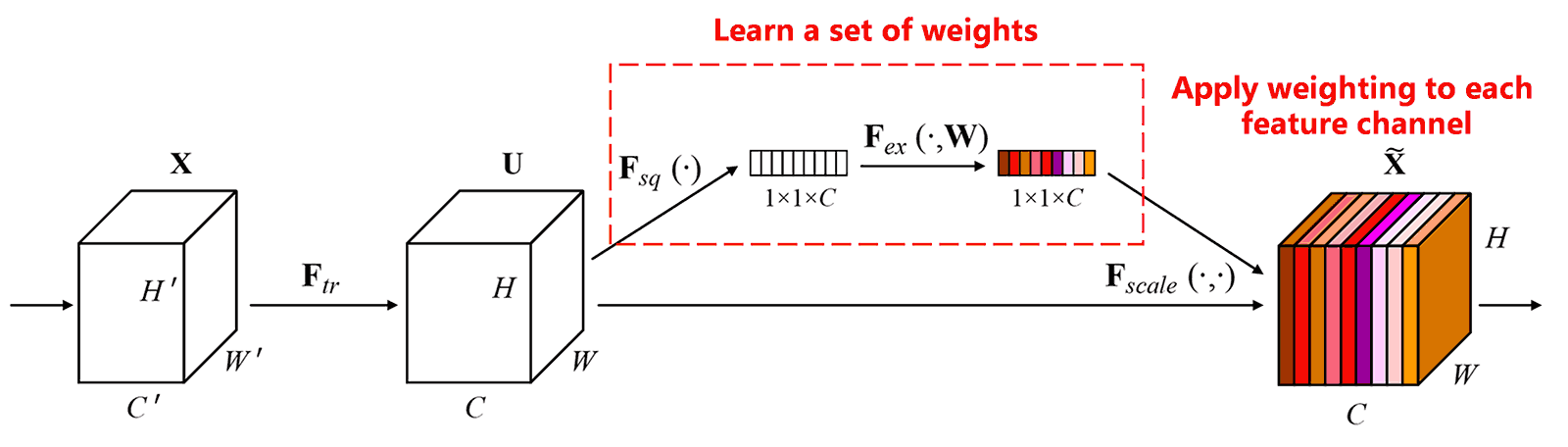
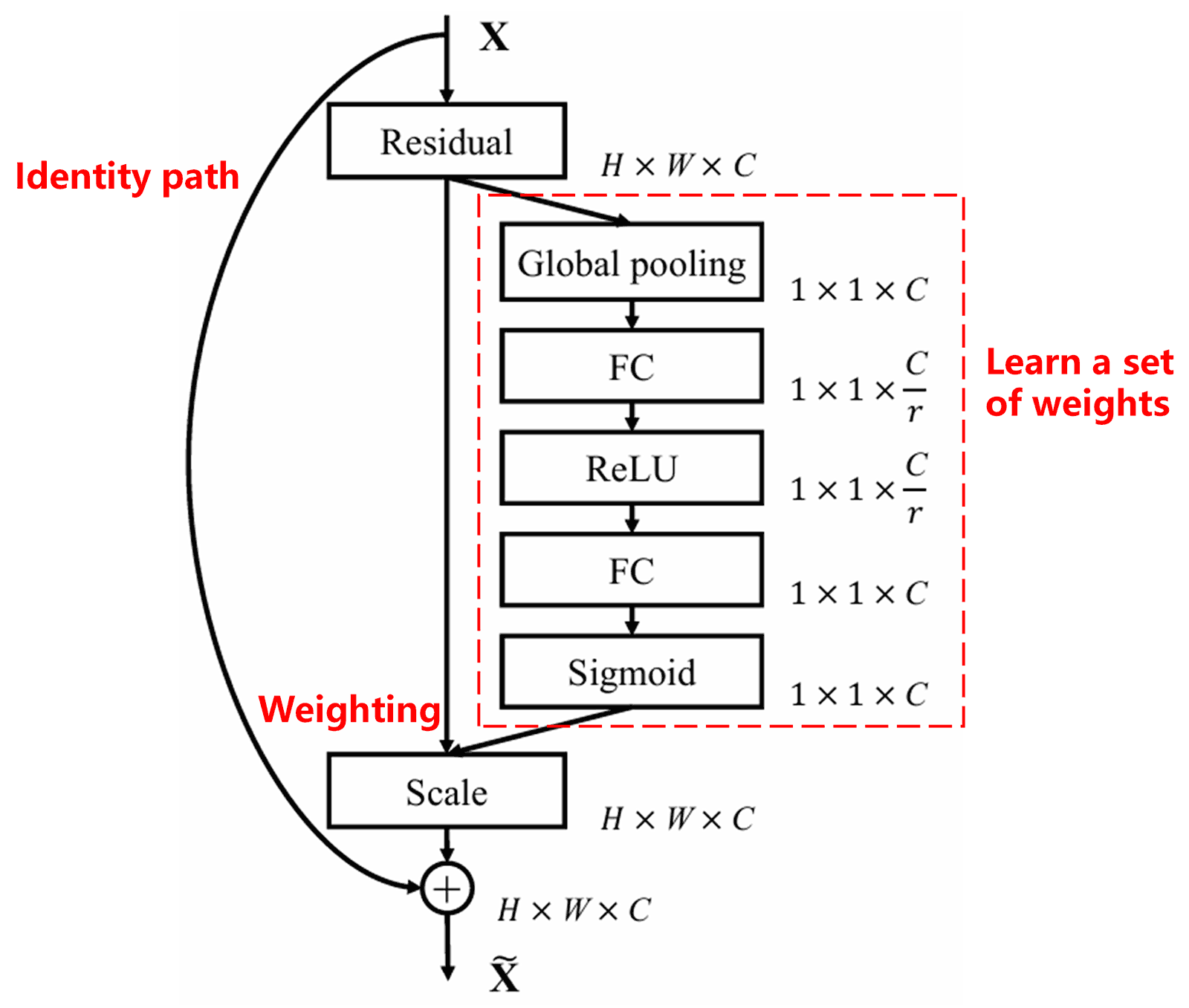
इस तरीके में, हर sample वास्ते weights रो एक independent set होवे। मतलब, कोई भी दो samples रे weights अलग-अलग होवे। SENet में, weights लाने रो रास्तो ओ है: “Global Pooling → Fully Connected Layer → ReLU Function → Fully Connected Layer → Sigmoid Function.”
4. Deep Attention Mechanism रे साथ Soft Thresholding
Deep Residual Shrinkage Network, SENet sub-network रे structure ने use करे। Network इस structure सूं deep attention mechanism रे under soft thresholding करे। ओ sub-network (जो लाल डिब्बे/red box में है) Learn a set of thresholds (thresholds रो एक set सीखे)। पछे, network इन thresholds ने use कर’र हर feature channel पर soft thresholding लगावे।
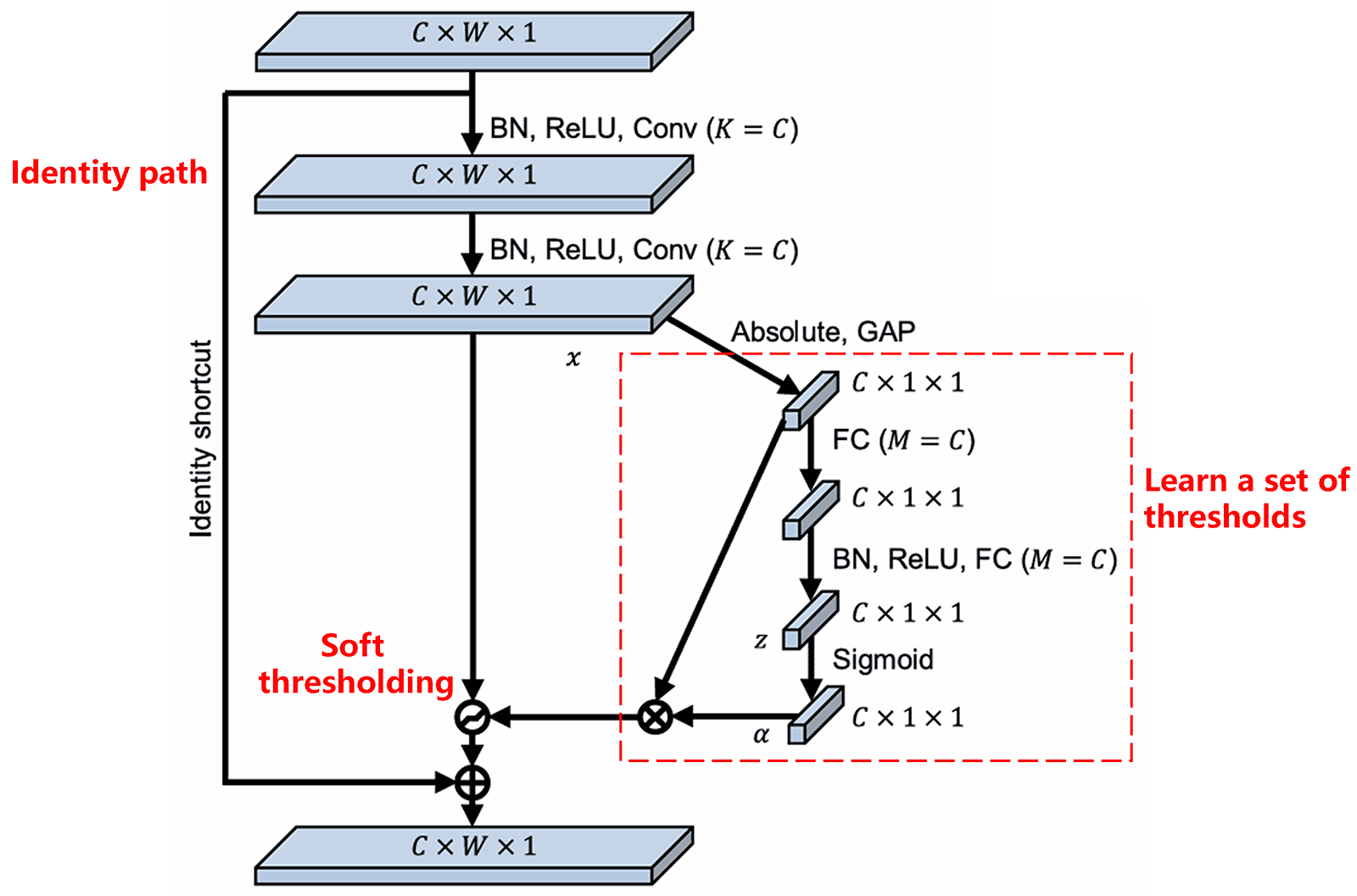
इस sub-network में, system पहली input feature map रे सारे features री absolute values निकाले। पछे, system global average pooling और averaging करे ताकि एक feature मिले, जिने A कहा। दूसरे रास्ते (path) में, global average pooling रे बाद system feature map ने एक छोटे fully connected network में डाले। ओ fully connected network आखरी layer में Sigmoid function use करे। ओ function output ने 0 और 1 रे बीच में normalize करे। इस process सूं एक coefficient मिले, जिने α कहा। आप final threshold ने α × A मान सको हो। इसलिये, threshold दो नंबरां रो गुणा (product) है। एक नंबर 0 और 1 रे बीच में है। दूसरा नंबर feature map री absolute values रो average है। ओ तरीको ध्यान राखे कि threshold हमेशा positive होवे। ओ तरीको ये भी ध्यान राखे कि threshold घणा बड़ो न हो जावे।
इसके अलावा, अलग-अलग samples सूं अलग-अलग thresholds बने। इस वास्ते, आप इस तरीके ने एक special attention mechanism मान सको हो। ओ mechanism current task वास्ते बेकार features ने पिछाणे। ओ mechanism दो convolutional layers use कर’र इन features ने 0 रे पास ले आवे। पछे, ओ mechanism soft thresholding use कर’र इन features ने zero कर देवे। या फेर इयाँ कहो, ओ mechanism current task वास्ते काम रा features ने पिछाणे। ओ mechanism दो convolutional layers use कर’र इन features ने 0 सूं दूर ले जावे। आखिर में, ओ mechanism इन features ने बचा के राखे (preserves)।
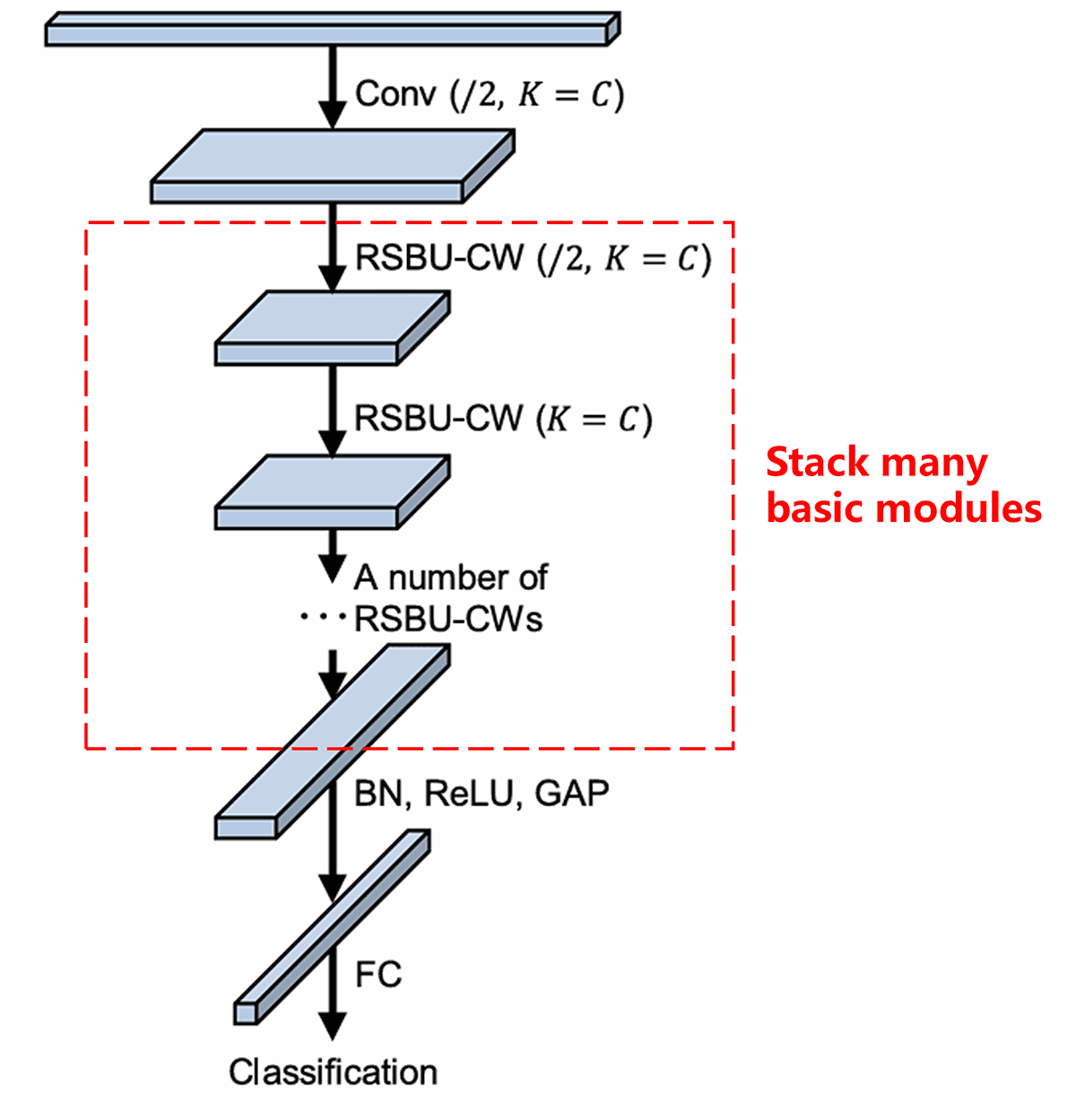
आखिर में, म्हे कई सारे basic modules ने एक रे ऊपर एक रख सको (Stack many basic modules)। म्हे इसमें convolutional layers, batch normalization, activation functions, global average pooling, और fully connected output layers भी जोड़ा। इयाँ पूरो Deep Residual Shrinkage Network बन जावे।
5. Generalization Capability
Deep Residual Shrinkage Network feature learning वास्ते एक general method है। क्यूँकि, घणे सारे feature learning tasks में samples में noise होवे ही है। Samples में बेकार जानकारी भी होवे। ये noise और बेकार जानकारी feature learning री performance खराब कर सके। उदाहरण वास्ते:
Image classification ने देखो। एक photo में और भी घणी चीजां हो सके। आप इन चीजां ने “noise” मान सको हो। Deep Residual Shrinkage Network शायद attention mechanism use कर सके। Network इस “noise” ने note करे। पछे, network soft thresholding सूं इस “noise” वाले features ने zero कर देवे। इस सूं image classification री accuracy बढ़ सके।
Speech recognition ने देखो। खास कर शोर-शराबे वाले माहौल में, जियाँ सड़क किनारे या factory में बात-चीत। Deep Residual Shrinkage Network speech recognition री accuracy बढ़ा सके। या कम सूं कम, network एक तरीको तो देवे ही है। ओ तरीको speech recognition री accuracy बढ़ा सके है।
संदर्भ (Reference)
Minghang Zhao, Shisheng Zhong, Xuyun Fu, Baoping Tang, Michael Pecht, Deep residual shrinkage networks for fault diagnosis, IEEE Transactions on Industrial Informatics, 2020, 16(7): 4681-4690.
https://ieeexplore.ieee.org/document/8850096
BibTeX
@article{Zhao2020,
  author    = {Minghang Zhao and Shisheng Zhong and Xuyun Fu and Baoping Tang and Michael Pecht},
  title     = {Deep Residual Shrinkage Networks for Fault Diagnosis},
  journal   = {IEEE Transactions on Industrial Informatics},
  year      = {2020},
  volume    = {16},
  number    = {7},
  pages     = {4681-4690},
  doi       = {10.1109/TII.2019.2943898}
}
Academic Impact
इस paper ने Google Scholar पर 1400 सूं ज्यादा citations मिल्या है।
अधूरे आंकड़ों (incomplete statistics) रे हिसाब सूं, researchers ने Deep Residual Shrinkage Network (DRSN) ने 1000 सूं ज्यादा publications/studies में काम में लियो है। ये applications घणे fields में फैलोड़ी है। इन fields में mechanical engineering, electrical power, vision, healthcare, speech, text, radar, और remote sensing शामिल है।